
WaterRower (UK) Ltd v Liking Ltd (T/A Topiom) [2022] EWHC 2084 (IPEC)
Key points
- Functional objects can benefit from copyright protection if they are works of artistic craftsmanship.
- Works protected by copyright under EU law may not be protected by copyright under UK law.
- The conundrum of when a design should be protected by copyright has vexed the legislature and courts for the last three centuries[1].
Summary
In the heavily anticipated decision of WaterRower v Liking, the Intellectual Property Enterprise Court (IPEC) of England and Wales considered the extent to which copyright protection can exist within functional designs and whether a rowing machine was a work of artistic craftsmanship.
If it could show it was then the claimant would benefit from the longer term of protection granted to copyright works when compared to designs.
The decision represents a significant divergence in approach between the UK and EU.
Judge Campbell-Forsyth held that WaterRower’s rowing machine did not qualify for copyright protection in the UK, despite being protected by copyright under EU law.
The “work” in question
There have been multiple versions of the rowing machines and significant time was spent identifying precisely what was the subject work. The Court observed[2]:
The first version was created in the period 1985-1987 by John H. Duke.
The initial design was created solely by Mr Duke and recorded in drawings created from approximately 1985 to 1987.
The initial design was handmade by Mr Duke. It is a feature of the Works that they continue to be hand-made.
The first version of the Works was created and subsequently modified by Mr Duke …. In late 1987 Mr Duke presented his hand-made version at a public boat show and received his first orders.
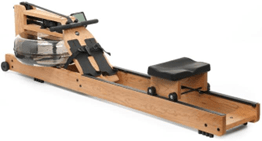
One of the images of a later iteration of the work is as below:
Functional designs and UK and EU law
Section 4(1) of the CDPA 1988 states:
Artistic works
In this Part “artistic work ” means—
(a) a graphic work, photograph, sculpture or collage, irrespective of artistic
quality,
(b) a work of architecture being a building or a model for a building, or
(c) a work of artistic craftsmanship.
The leading UK authority on works of artistic craftsmanship is the House of Lords decision in Hensher Ltd v Restawile[3], relating to a prototype piece of furniture. Each of the five Lords found the furniture to involve craftmanship, but it was held not to be “artistic”. Despite the unanimous decision of the Lords, each reached a very slightly different reasoning, creating a lack of clear guidance[4].
Recognising the challenge, the judge identified the following principles[5]:
- Parliament has created a distinction between copyright protection accorded to works within with CDPA s.4(1)(c) and the other artistic works under s.1. The former requires artistic quality, the latter do not.
- A work of artistic craftsmanship involves a medium that has been worked with craftsmanship, wherein the visual appearance involves artistic expression, which is not wholly constrained by functional constraints.
- The ordinary meaning of the statutory phrase requires no further formulation or judicial definition.
- The statutory phrase should be assessed as a whole.
- Copyright protects expression. The process of creating a work of artistic craftsmanship and the resulting work of artistic craftsmanship are intrinsically interrelated. The craftsmanship creating the work must be artistic; the work will be one of artistic craftsmanship.
- The court can rely on any evidence it views as relevant to assist it forming an objective view on the statutory question.
- The assessment is not one that requires any value “assessment of artistic merits or quality” in order to decide whether a work is one of artistic craftsmanship.
- Mass manufacture of the work does not preclude it from being a work of artistic craftsmanship. Neither do commercial aims or the involvement of technology or tools in the creation of the work.
- The author of the work can be multiple people provided there is a sufficient nexus.
- More than eye appeal is needed – visually appealing aesthetics will often be present in works of artistic craftsmanship but such evidence does not determine the underlying question of whether that work is one of an artist craftsman.
- It is the craftsmanship in the work that is relevant – not the qualification or training of the craftsman – although skill and training will assist in assessing the presence of craftsmanship.
Copyright under EU Law
The judge also considered the position under retained EU law. In the pre-Brexit decision of Cofemel[6], the European Court of Justice (CJEU) found that a ‘work’ of copyright must meet the following criteria:
- The work must be original in the sense that it is the author’s own intellectual creation[7] and reflect the personality of the author, as an expression of their free and creative choices[8].
- The work must be identifiable with sufficient precision and objectivity[9].
The CJEU decided in Brompton[10] shortly after Cofemel, that copyright protection could apply to the famous folding bike.
Post Brexit, English courts continue to apply retained EU case law[11] as it was prior to 31 December 2020. The UK Supreme Court or Court of Appeal may depart from CJEU rulings if they consider it appropriate.
The first instance decision
Judge Campbell-Forsyth found that the original work, the prototype, was the author’s own intellectual creation and original. However, it was found that despite this, it was not entitled to copyright protection because it was not artistic.
The judge explained that whilst Mr Duke showed his craftsmanship through his choices of materials, including the wooden frame, the nature of the joins and the finish, these aspects were not artistic.
The court acknowledged that the machine did have aesthetic appeal, but in the creation of the work, Mr Duke did not have the character of an artist craftsman. The evidence did not give the impression that the prototype was the result of a mind with a desire to create “something of beauty which would have an artistic justification for its own existence”[12].
The machine was also considered a commercial development. Although visually appealing, the machine’s design choices, such as the use of wood and its streamlined form, were primarily intended to improve functionality and performance as a fitness product. Its primary purpose remained functional rather than artistic. As a result, it did not satisfy the Hensher test for artistic merit. Artistic intent must be separate and distinct from any practical utility.
In addition, the minor iterations in later designs did not constitute original works[13].
Key takeaways
- Copyright will always be challenging to establish in functional objects. However, design right expires much sooner and so when faced with a choice of no protection at all, claimants seek to rely on copyright.
- The decision is likely to be appealed given the uncertainty around the criteria for “artistic craftsmanship”.
- It may be several more centuries before the issue is finally resolved.
- Brand owners should continue to take advantage of the UK’s cost-effective design registration process, as well as documenting any iterations during the creative processes.
References:
[1] See paragraphs 15 to 28 of Lucasfilm Ltd v Ainsworth [2011] UKSC 39; [2012] 1 AC 208 for the detailed legislative history from the Statute of Anne 1709 (amended in 1798), followed by the Sculpture Copyright Act 1814, The Copyright of Designs Act 1839, The Designs Act 1842, The Designs Act 1850, The Patents, Designs and Trade Marks Act 1883, The Patents and Designs Act 1907, The Copyright Act 1911, The Patents and Designs Act 1919, The Registered Designs Act 1949, The Copyright Act 1956 and The Design Copyright Act 1968.
[2] At paragraph 16
[3] George Hensher Ltd v Restawile Upholstery (Lancs) Ltd [1976] AC 64
[4] This challenge was considered in Response Clothing Limited v The Edinburgh Woollen Mill Limited [2020] EWHC 148 (IPEC) and Lucasfilm Ltd v Ainsworth [2011] UKSC 39; [2012] 1 AC 208
[5] Paragraph 135
[6] Cofemel – Sociedade de Vestuário SA v G-Star Raw CV, Case C-683/17 [2019]
[7] Cofemel at [29]
[8] Cofemel at [30]
[9] Cofemel at [32]
[10] SI v Chedech/Get2Get (Brompton), Case C-833/18) [2020]
[11] Pursuant to and in line with the European Union (Withdrawal) Act 2018
[12] Hensher, Lord Kilbrandon paragraph 98c
[13] Paragraphs 173 and 176