Getty Images (US) Inc & Ors v Stability AI Ltd [2025] EWHC 38 (Ch) (14 January 2025)
This article is the first in a series to examine the dispute in the English courts between Getty Images and Stability AI and the implications for images generated using artificial intelligence.
The case is viewed as a key test of how far copyright, trade mark and passing off protection extend when human-created content is used to train AI systems that generate new images.
We will evaluate the parties’ arguments and consider more widely whether the current legislative architecture in the United Kingdom is able to address the new challenges brought by a revolutionary technology. If it is not, what reform might improve the system?
Background
Stability AI is an artificial intelligence company. It has developed Stable Diffusion, an open-source image-generation model that can create synthetic images from text or image prompts.
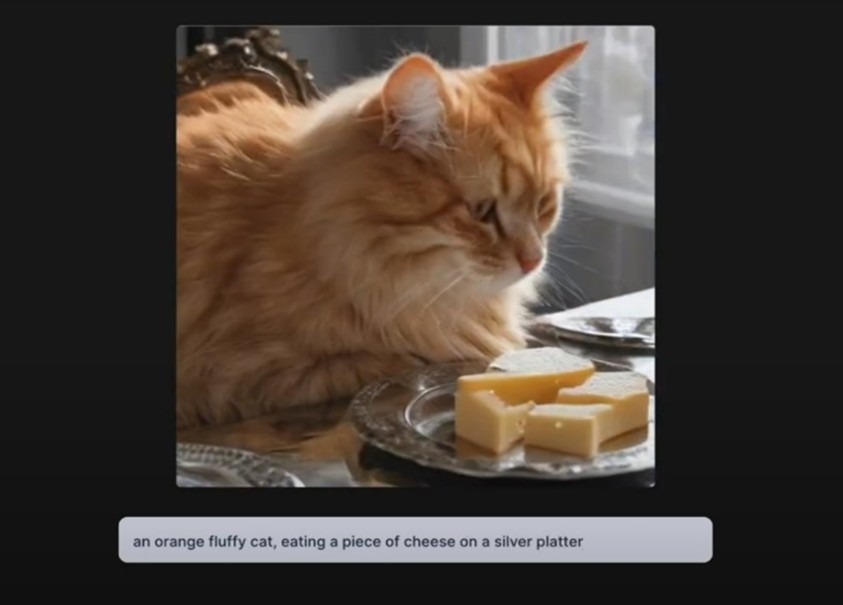
(synthetic image generated by Stable Diffusion using text prompts)
Getty Images (Getty) has a catalogue of millions of visual assets, including photographs, video footage and illustrations together with associated captions and key words. Getty alleged that Stability AI “scraped” millions of Getty-owned images without permission to train its model. Getty claimed that the resulting outputs by Stable Diffusion reproduced a substantial part of the copyright works because they visually resemble Getty’s photos and display Getty’s watermark in some images.
The trial was in June 2025 and on 4 November 2025 the High Court Judge handed down the judgement[1]. There have been several hearings and interim decisions[2] which capture the essence of the arguments.
Getty’s copyright infringement claims
Getty alleged three types of copyright infringement:
- The first allegation – Primary copyright infringement (training the model)[3]
Getty alleged that Stability AI has unlawfully copied and processed millions of Getty-owned images and has used these to train the Stable Diffusion models.
- The second allegation – Primary copyright infringement (communicating infringing works to the public)[4]
Getty alleged that Stability AI is liable for authorising or facilitating the reproduction and communication to the public of infringing works generated by the model. In other words, the models created in response to user prompts are said to reproduce images similar to Getty’s works, some of which even retained the Getty and iStock watermarks.
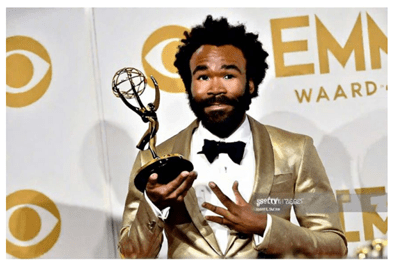
(An image created by Stable Diffusion, which retained the Getty watermark)

(An image created by Stable Diffusion, which retained the iStock watermark)
- The third allegation – Secondary copyright infringement (importation)[5]
Finally, Getty claimed that Stability AI has imported or made available infringing copies of its works in the UK, essentially through its online platform.
Stability AI’s defence to the copyright infringement claims
- Defence to the first allegation – primary copyright infringement (training the model):
Stability AI argued that the training of Stable Diffusion was conducted entirely outside the UK and therefore falls outside the territorial scope of UK copyright law.
Although the company has staff in the UK, it maintained that all training activities took place on cloud-based servers located abroad, and that no training data were ever downloaded, stored, or processed within the UK. On that basis, Stability contended that no acts of infringement could be said to have occurred in the jurisdiction.
- Defence to the second allegation – primary copyright infringement (communicating infringing works to the public):
Stability AI’s position was that users, not the company itself, generate the outputs using Stable Diffusion. Users independently craft prompts and control variables, determining how closely an output resembles any existing work. Since Stable Diffusion begins with random noise[6] each time it creates an image, the same prompt produces different results. This randomness, Stability AI argues, shows that the model is not retrieving or copying any substantial part of specific images from its training data.
Getty also faced challenges substantiating its title claims, proving clear ownership and chain of title for some of the specific images said to have been infringed and linking those works directly to the model’s outputs.
- Defence to the third allegation – Secondary copyright infringement (importation):
Stability AI asserted that the model weights[7] (the numerical parameters generated during training) do not contain copies of the original images used for training. These weights, it argues, are purely intangible data structures, consisting of mathematical values that describe patterns and relationships learned by the model. Because they have no physical form and do not embed or reproduce the training images themselves, Stability contended that they cannot be classified as “infringing articles” under the CDPA, which uses language such as “importation” and “possession” typically associated with tangible goods.
Getty’s trade mark infringement and passing off claim
Getty alleged that their trade marks were infringed as there was unauthorised appearance of its watermarks within AI-generated outputs[8]. Getty argues that such use:
- Damaged its goodwill by falsely implying an affiliation or endorsement between Getty and Stable Diffusion when none exists;
- Tarnished the reputation of its trade mark, as AI-generated images could be misleading, or inappropriate in nature; and
- Constituted use in the course of trade, particularly where AI-generated images were distributed online.
Getty maintained that the inclusion of its watermark could confuse consumers into believing that Getty has authorised, licensed, or produced the AI-generated images, thereby undermining its brand’s integrity and commercial value.
Stability AI’s defence to the trade mark infringement allegations
Stability AI contended that the watermark’s appearance in AI outputs was not deliberate trade mark use, but rather a by-product of how the model was trained. According to Stability, there is no trade mark use because the mark is not employed to market or identify goods; it merely appears incidentally in the generated images and does not indicate origin.
The Judgement
No secondary copyright infringement
The Court accepted, applying the “always speaking” principle, that an “article” can include intangible digital material such as an AI model. However, the copyright claim failed because Getty could not show that the model, at the point of importation into the UK, contained stored copies, transient or permanent, of its works, and the judge also recorded that there was no evidence that the training occurred in the UK. In effect, copying done abroad did not establish UK liability on these facts, and a training process that does not leave stored copies inside the model likewise did not amount to importation of an “infringing copy.”
Limited trade mark infringement
The trade mark aspect of the case only succeeded on a very limited and historic basis. Getty Images demonstrated that some earlier versions of Stable Diffusion produced synthetic images in the real world that displayed watermarks resembling the iStock trade mark, and, to a more limited extent, the Getty Images trade mark. These instances were enough for the Court to find infringement under sections 10(1) and 10(2) of the Trade Marks Act 1994, but only in respect of a small number of specific example images, as discussed below.
- Section 10 (1) Trade Marks Act 1994
The Court concluded that Stability had infringed the iStock mark, but only in an extremely narrow and historic way. The finding was tied to specific example outputs from the earlier version of the model (version v1), most clearly demonstrated by the Spaceships image below.
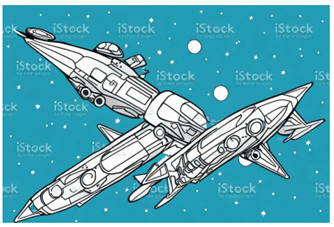
(the Spaceships Image)
In these example outputs, the generated iStock watermark appeared sufficiently clear and legible that it was effectively identical to the registered iStock trade mark.[9] However, the same claim failed in relation to the Getty Images marks because the synthetic watermarks were typically blurred, misspelt, or visually distorted.
As a result, the Court held that double identity was established only for those specific proven v1 outputs not for v1 outputs generally and only in respect of iStock mark.
- Section 10(2) Trade Marks Act 1994
The Court also accepted that there was a likelihood of confusion, but only in respect of three specific real-world images, the Spaceships and Dreaming images showing iStock-style watermarks generated by earlier versions of Stable Diffusion (version v1), and the First Japanese Temple Garden image showing a Getty Images-style watermark generated by version v2.1, as shown below.
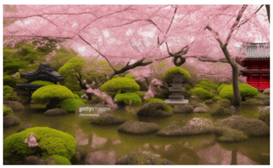
(the First Japanese Temple Garden Image)
(the Spaceships Image)

(the Dreaming Image)
In those isolated examples, the Court considered it realistic that an average consumer might assume that Getty had licensed the technology to Stability or was otherwise commercially connected with it.[10] However, the Court stressed that this assessment was “highly fact-sensitive”. The clarity and appearance of generated watermarks varied each time, and Getty could not show how often clear watermarks appear in practice. As a result, the Court refused to extend the likelihood of confusion finding beyond those few proven examples. The infringement was therefore treated as limited and historical, and not as evidence of ongoing or systemic infringement by the AI model.
- Section 10 (3) Trade Marks Act 1994
Finally, the broader claim of tarnishment and damages was dismissed entirely. Getty could not produce evidence that consumers had actually encountered degrading or harmful content with a Getty or iStock watermark, nor that the appearance of synthetic watermarked images had changed consumer economic behaviour in any measurable way.[11] Although the Court acknowledged the theoretical risk of reputational harm from AI-generated “deepfakes” or explicit content, there was no sufficient evidence that such harm had occurred in practice.
Conclusion
Getty succeeded only on a narrow, historic basis, where a small number of real-world outputs clearly displayed its trade marks. Broader claims including those based on reputation, consumer behaviour, or systemic copying failed for lack of evidence. On the copyright side, the Court accepted that AI models can constitute “articles,” but concluded that Getty could not show that Stable Diffusion stored copies of its works or that any training occurred in the UK.
In part two of this series, we consider the potential implications for AI developers and rights holders of a decision which favours either party.
[1] Getty Images (US), Inc. & Ors v Stability AI Ltd [2025] EWCA 2863 (Ch) (4 Novemeber 2025)
[2] Getty Images (US) Inc & Ors v Stability AI Ltd [2023] EWHC 3090 (Ch) (01 December 2023)
Getty Images (US) Inc & Ors v Stability AI Ltd [2025] EWHC 38 (Ch) (14 January 2025)
Getty Images (US), Inc & Ors v Stability AI Ltd [2025] EWHC 109 (Ch) (01 May 2025)
Getty Images (US), Inc. & Ors v Stability AI Ltd [2025] EWCA Civ 749 (16 June 2025)
[3] Section 17 Copyright Designs Patents Act 1988 (CDPA)
[4] Section 16(2) and 20 CDPA
[5] Section 22, 23(a) and 23(b) CDPA
[6] See “How AI Creates Art” https://weaviate.io/blog/how-ai-creates-art, accessed 17 October 2025
[7] See “Weights and Bias in Neural Networks” https://www.geeksforgeeks.org/deep-learning/the-role-of-weights-and-bias-in-neural-networks/?utm_source=chatgpt.com, accessed 17 October 2025
[8] Section 10(1-3) Trade Mark Act 1994
[9] Section 10(1) Trade Mark Act 1994
[10] Section 10(2) Trade Mark Act 1994
[11] Section 10(3) Trade Mark Act 1994