
Golf is viewed by many as a niche sport, reflected in the quote from Winston Churchill that “Golf is a game whose aim is to hit a very small ball into an ever smaller hole, with weapons singularly ill-designed for the purpose“. However, in 2025, England Golf estimated that, in the first six months of 2025, over 5.75 million scores were entered into the World Handicap SystemTM, a growth of some 29% compared with the same period in 2024. In the USA, the National Golf Foundation estimated that the game reached 136 million Americans in 2025, an increase of 43% since 2016.
As we enter the summer and the weather has improved, many fair-weather golfers have dusted off their clubs and headed to the course. From the latest game improving clubs, balls that fly further than ever before, on-course aids (like range finders and yardage apps), and practice ground training aids, the modern golf industry is huge, with an estimated impact of $102 billion in the US alone. However, as you step on to the first tee and swing your brand-new driver, have you considered the technological developments which underpin the industry?
In such a competitive market, the drive to obtain strong Intellectual Property Rights (IPR) is a vital consideration. IP is a broad term which encompasses registered rights (which require a registration process, and include Patents, Registered Designs and Registered Trade Marks), and unregistered rights (which arise automatically, and include Copyright and Unregistered Design Rights in the UK). Patent rights form a key part of this, providing protection for technological developments.
Historical view
The huge US market is a key part of the patent strategy for companies active in this space. A snapshot of US patent¹ filing trends over the last 30 years (obtained using the Minesoft PatBase patent searching tool) reveals a significant increase in activity, with US patent and design patent publications in the golf space increasing by more than 50%:
Figure 1: Priority patent and design patent application filings first published in the US between 1993 and 2023.
As shown in Figure 1, US priority filing data for golf-related patents and designs reveals a clear narrative of innovation within the sport. Between 1993 and the early 2000s, a consistent upward trajectory is observed, reflecting a period of expanding technological development and commercial interest. This rise broadly aligns with the surge in popularity of golf during the late 1990s and early 2000s.
In contrast, between 2003 and 2023, the level of US priority filings stabilised, with the number of US priority patent and design filings oscillating around an average of around 2,382 applications annually. This might suggest that, although the sport has maintained steady commercial and technological activity, the pace of innovation has become more muted.
Perhaps more interestingly, the more recent spike in golf’s popularity during and immediately following the COVID-19 pandemic (2020–2021) does not appear to have had an impact on patent and design filing. Rather, patent activity has remained broadly consistent with the preceding two decades, indicating that increased participation does not necessarily translate into increased innovation output. It is worth noting, however, that the lag time between patent filings and publication means that the available filing data for 2024 and 2025 is incomplete, so has not been included here. As a result, emerging trends may not yet be fully visible.
Over the 1993–2023 period, a total of 71,224 priority applications were filed in the US, of which approximately 67.4% (48,030) ultimately proceeded to grant. This substantial volume underscores the long-standing importance of intellectual property in the golf industry. Within this, the top five applicants in the sector collectively accounted for almost a quarter of US priority patent and design filings over the period.
Taken together, the data suggests that, while golf as a sport continues to grow and experience periodic surges in popularity, its core technologies may be approaching maturity. Innovation appears to be largely incremental, rather than transformative. This is consistent with industry practice, where major manufacturers release new clubs and equipment on a semi-regular basis, typically offering iterative refinements and modest performance gains rather than fundamentally new concepts.
Recent filing trends
A more detailed review of the filing statistics reveals the balance of technologies across the patent and design patent applications, reflected in Figure 2 below.
Figure 2: US patent and design patent priority filings published in 1993 v 2023
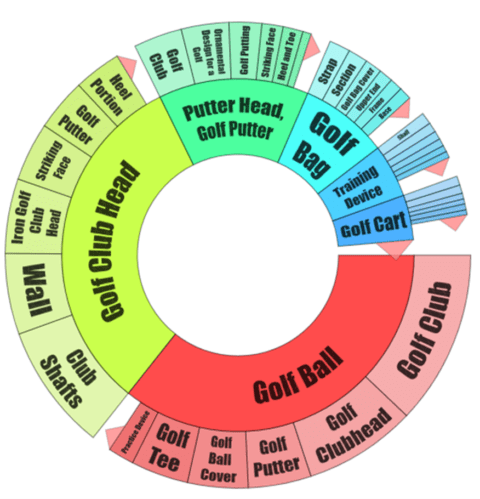
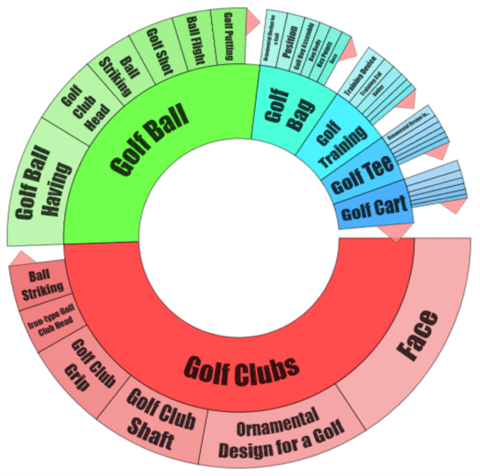
As shown in Figure 1 above, although the total number of priority filings has generally increased over the relevant time period, the approximate balance of filings across different technology areas has not changed significantly. For example, the proportion of US patent or design patent applications in the golf club space has increased a little, representing around half of US filings by 2023. As shown in Figure 2, golf ball related technologies still represent a significant proportion of priority filings, but have been squeezed from around one third of filings to a little over one quarter by 2023. This aligns with what we see in terms of product releases. For example, most manufacturers release new drivers, fairway woods, and irons each year, or couple of years. In contrast, new golf balls hit the market comparatively infrequently. This may suggest that significant and impactful improvements to golf ball technologies are more difficult to identify and achieve, whereas designers have more levers to pull when it comes to improving golf clubs.
The headline statistics can mask the true filing activity though, highlighting the complexities involved in patent searching. For example, delving deeper into the results for golf ball technologies, we can see that patent filings in that space also cover e.g. golf ball collecting devices. Also, whilst the statistics show variations in filing activity in specific areas, the total number of applications has increased. For example, the proportion of golf ball related filings has gone down over the period, although the total number of golf ball filings has gone up.
Looking at the main technology areas identified in Figure 2, we can see that US patent and design patent applications filed more recently include the following.
Golf balls
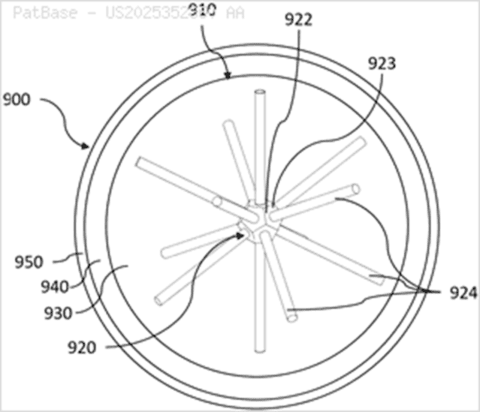
US Patent Publication no. US-2025352860-A1 for “GOLF BALL INCLUDING HYBRID CORE FORMED VIA THREE-DIMENSIONAL PRINTING”, published in November 2025, focusing on a ball having a first core layer formed from three-dimensional printing and having a non-spherical profile, and a second core layer formed from traditional core layer formation techniques around the first core layer. The first core layer has a profile comprised of a central hub and a plurality of spokes:
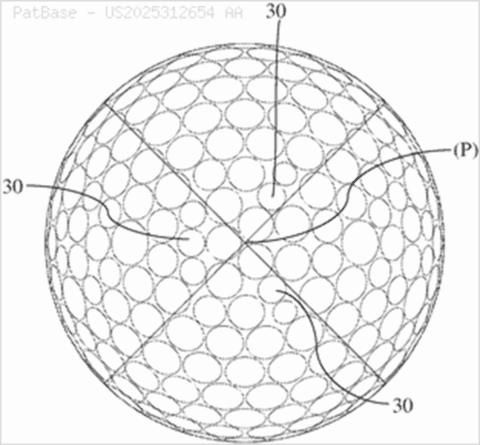
US Patent Publication no. US-20250312654-A1 for “GOLF BALL HAVING SPHERICAL TRIANGLE SEGMENTED DIMPLE PATTERN”, published in October 2025, focusing on a dimple pattern configuration comprising a spherical triangle segment division used to maintain a high level of symmetry in the dimple pattern while also maintaining a specific dimple layout in polar regions of the ball:
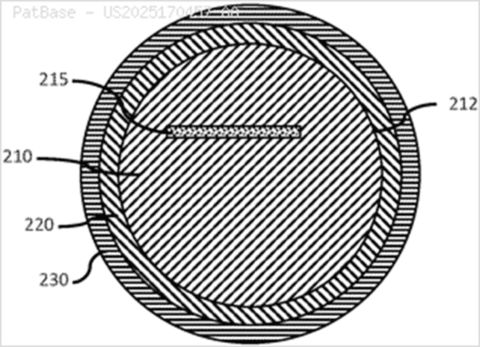
US Patent Publication no. US-2025170457-A1 for “GOLF BALL CORE INCLUDING RADAR DETECTABLE COMPONENT”, published in May 2025, focusing on a golf ball including a radar detectable component that is integrated with the core of the golf ball:
Golf clubs
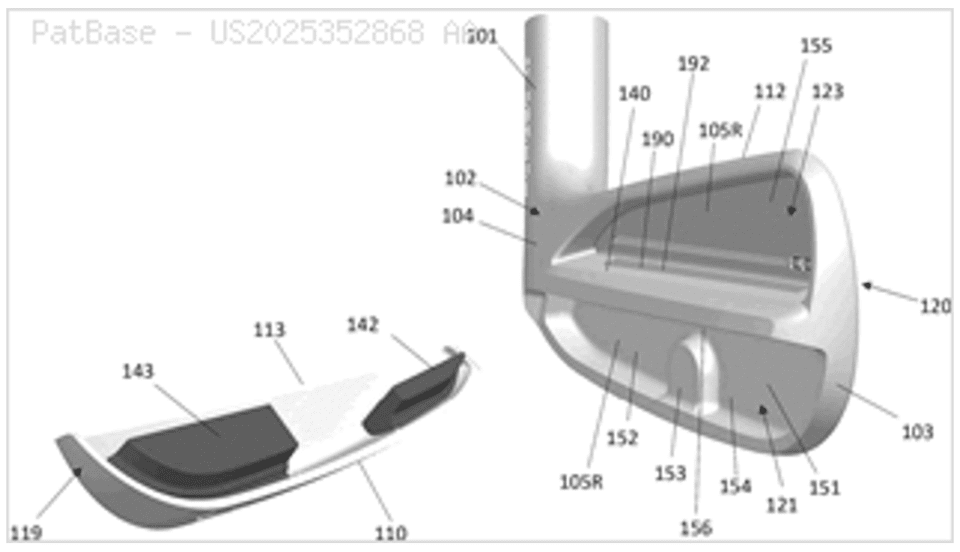
US Patent Publication no. US-2025352868-A1 for “GOLF CLUB HEAD WITH VARIABLE FACE THICKNESS”, published in November 2025, focusing on a support bar protruding rearwardly from a striking face of the club head, plus upper and lower cavities:
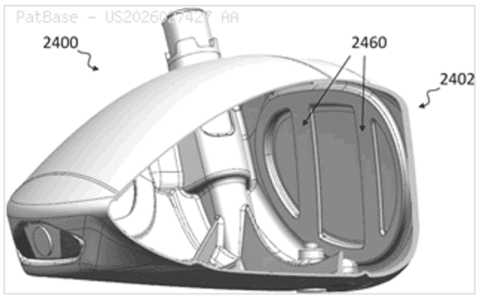
US Patent Publication no. US-20260027427-A1 for “GOLF CLUB HEAD WITH CROSS-MEMBERS”, published in January 2026, focuses on a striking face with different thickness regions, and internal support members connecting different points on a thickened stress reducing region of the striking face:
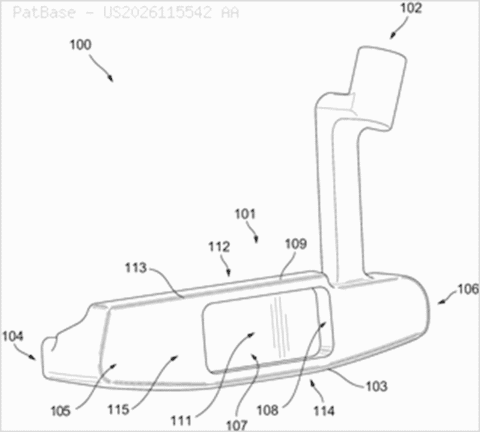
US Patent Publication no. US-20260115542-A1 for “PUTTER-TYPE GOLF CLUB WITH FRONT SURFACE HAVING DYNAMIC BUMPERS”, published in April 2026, focusing on an array of dynamic bumpers designed to amplify the elastic response of a putter head, enabling sufficient dynamic launch and greater topspin in a golf ball at impact:
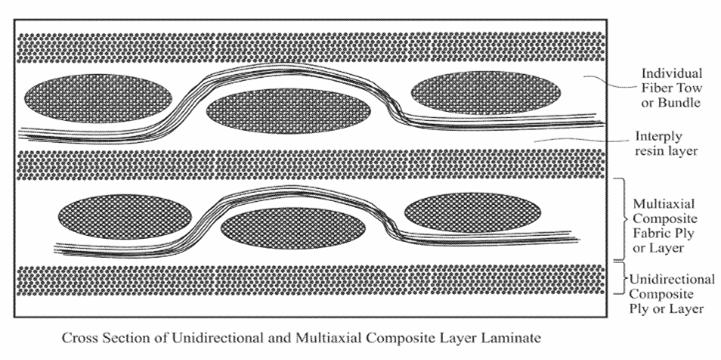
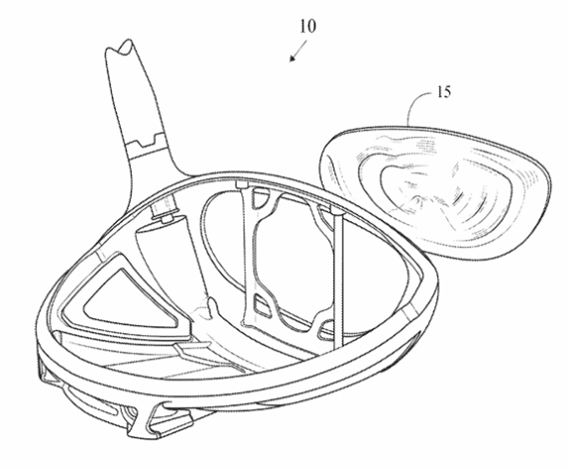
US Patent Publication no. US-12508478-B1 for “COMPOSITE COMPONENTS OF A GOLF CLUB HEAD”, published in December 2025, focusing on a composite material for a component of a golf club head which includes composite layers and an interlaminar layer that includes vertically aligned carbon nanotubes, Z-Axis aligned carbon fibers or graphene platelets:
 Shoes
Shoes
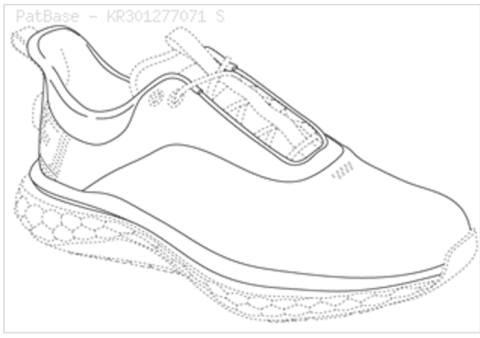
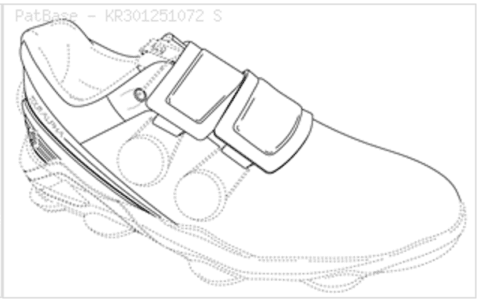
These represent a significant portion of filings, many of which focus on the appearance of the products, evidenced e.g. by US Design Patent Publications US-D1094994-S and US-D1070291-S:
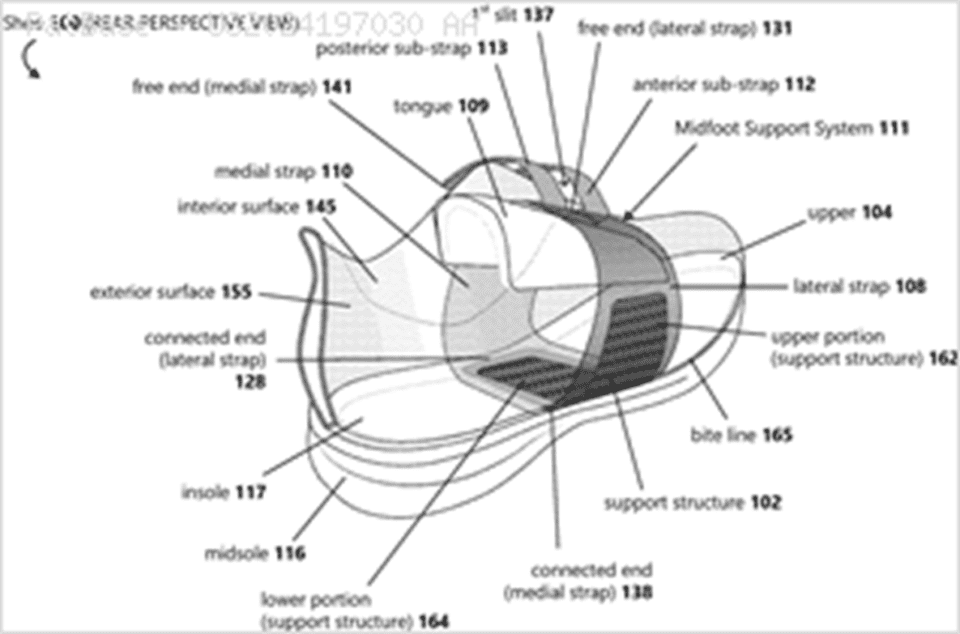
Protection for golf shoes is not however restricted to design patents covering their appearance, as evidenced by US-12458100-B for “FOOTWEAR MIDFOOT SUPPORT SYSTEM”, granted in November 2025, focusing on a golf shoe with a midfoot support system including a lateral strap extending from underfoot and over the midfoot region and a medial strap extending from underfoot inside the upper over the midfoot region:
Golf bags
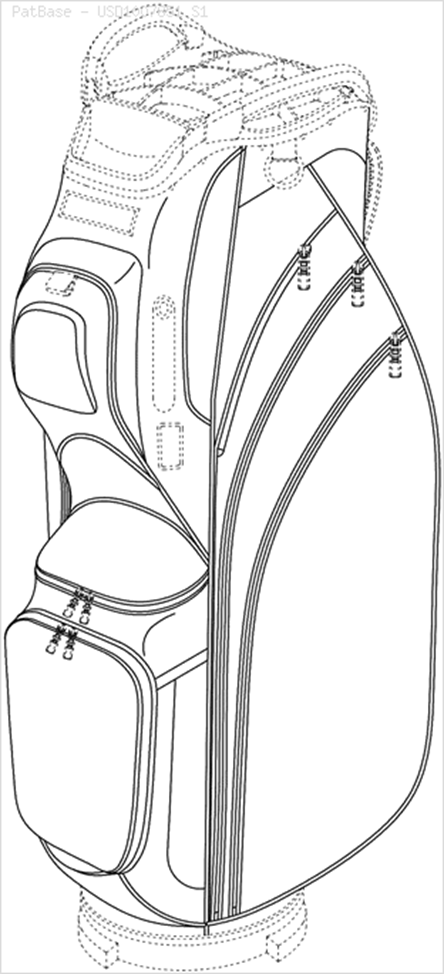
These similarly represent a significant portion of filings, many of which again focus on the appearance of the products, evidenced e.g. by US Design Patent Publication US-D1007851-S:
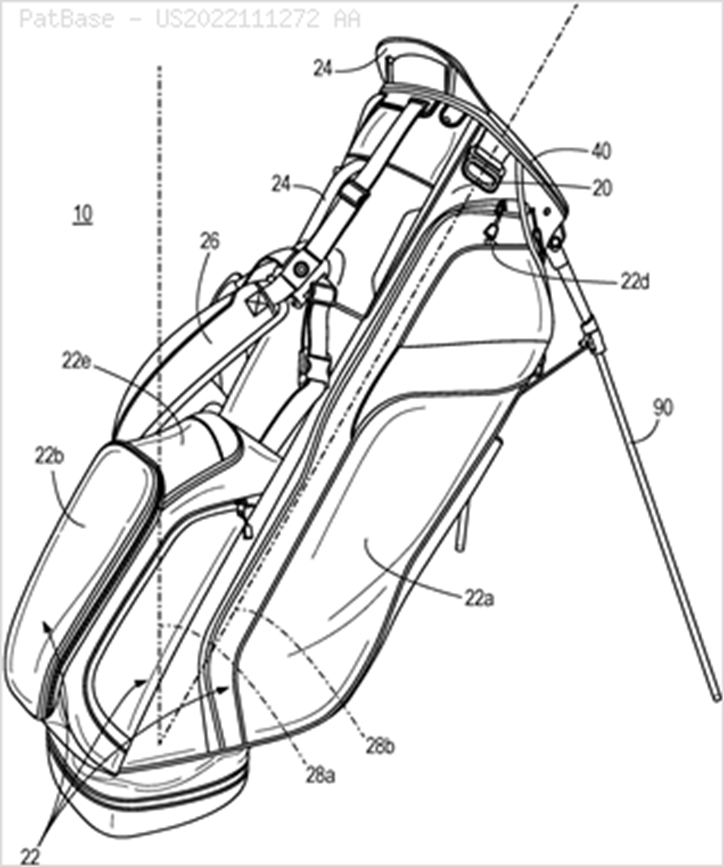
Again, protection for golf bag developments are not restricted to design patents covering their appearance, as evidenced by US-12629575-B for “GOLF BAG WITH FOLD OUT CRUSH ZONE”, granted in May 2026, focusing on a golf bag with a deployable stand assembly and anti-tangle features that prevent clubs from tangling within the golf bag, in particular, to prevent golf club grips from crossing over:
Training aids
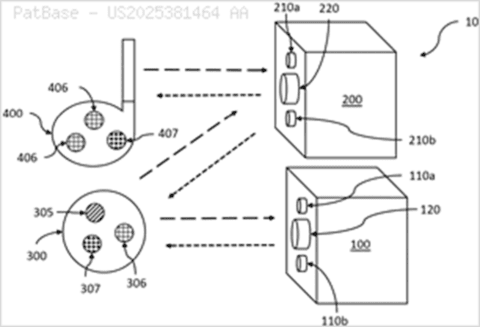
These are prevalent, as evidenced for example by US Patent Publication no. US-20250381464-A for “LAUNCH MONITOR FOR DYNAMIC GOLF OBJECT INCLUDING BACKING MARKER AND PRIMARY FLUORESCENT MARKER”, published in December 2025, focusing on a launch monitor that uses a backing marker underneath a primary marker applied to a dynamic golf object that is configured to be tracked via the launch monitor:
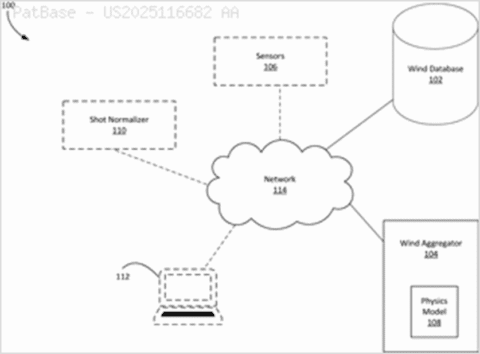
US Patent Publication no. US-20250116682-A1 for “WIND VELOCITY ESTIMATION”, published in October 2025, in which individual wind velocity estimates are determined for two or more trajectories, wherein the determination comprises comparing a model acceleration of the ball with an observed acceleration of the ball, derived from the measurements:
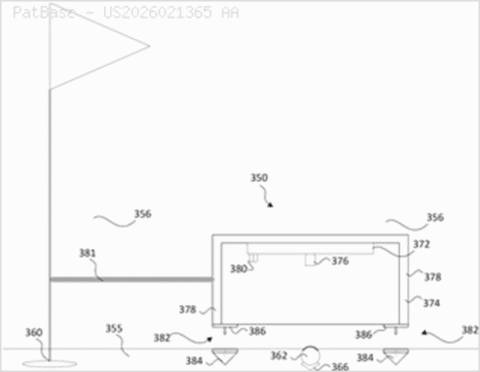
US Patent Publication no. US-20260021365-A1 for “MEASURING TOOL FOR ASSESSING GOLF BALL ALIGNMENT”, published in January 2026, focusing on an alignment measuring tool having a computing device, a camera for capturing images of a surface within a field of view, and a support structure configured to support the computing device and the camera in a stationary position:
US Patent Publication no. US-12564768-B1 for “GOLF BALL WITH ELECTRICAL COMPONENTS”, granted in March 2026, focusing on a golf ball comprising piezoelectric material and a wireless transmitter: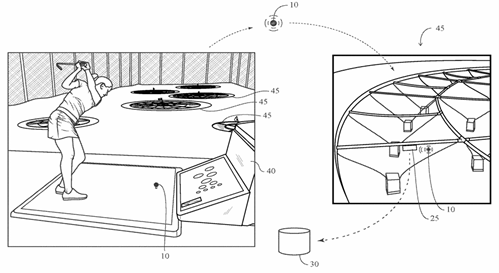
Conclusion
While Golf has historically been viewed as a niche or elite sport, participation figures and economic data reveal a large and technologically driven industry. The patent filing trends discussed here highlight the importance of intellectual property in this competitive landscape. As discussed, US patent filings rose sharply in the late 1990s and early 2000s before stabilising until the present day, despite recent growth in participation between 2020-2022. This pattern suggests a steady innovation output focused primarily on incremental improvements rather than groundbreaking advances.
In addition, despite changes in filing volume, the balance of technologies for which protection is sought has remained broadly consistent over time, with most filings relating to golf clubs and golf balls. Our analysis shows increased filing activity by the main filers, with diversification into areas like apparel and advanced materials, in parallel with applications focussing on core products. This further points to a mature but active innovation ecosystem in which incremental advances are the primary driver of patent filings.
¹We have focussed on patent families including a US Patent or Design Patent application in view of the size of the US market